Product Leaders
From API Docs to Deals: Bridging the Gap Between Product and Sales
Date
Dec 9, 2025
Author
Matt Astarita
Picture the scene: The engineering team pops the champagne. After three months of sprinting, the "NetSuite Bi-Directional Sync" is finally live in production. The code is clean, the unit tests passed, and the documentation is up.
Two weeks later, the Product VP checks the dashboard. Zero active users.
They storm over to the VP of Sales. "Why aren't you selling the new integration?"
The VP of Sales shrugs. "My reps don't know what a 'webhook' is, and they can't demo it because it has no UI. We’re sticking to the core product."
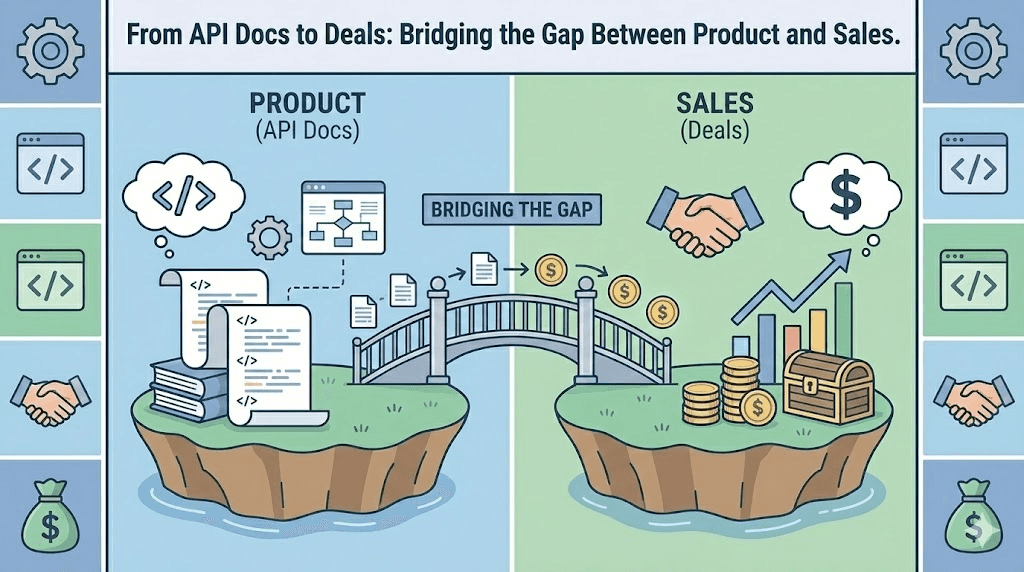
This is the Product-Sales Gap. In 2026, this gap is where millions of dollars in R&D investment go to die.
It is not the Sales team's job to figure out how to sell an API. It is the Product Leader's job to package that API into a story they can repeat.
Here is how to cross the chasm from "Code" to "Cash."
The "Release" vs. The "Launch"
We need to distinguish between two activities that Product Leaders often conflate.
A Release is when code is deployed to a server. This is an Engineering milestone.
A Launch is when the market understands the value of that code. This is a Commercial milestone.
If you ship the code and email a link to the API docs to your sales team, you have Released, but you have not Launched.
Docs are for developers. Decks are for buyers. You must build both assets simultaneously.
It is important to recall that while API Documentation is a Marketing Tool, it isn't the only marketing.
Translating "Endpoints" into "Money"
Your sales reps are not stupid, but they are not engineers. When you talk to them about "Latency" and "Schema Mapping," their eyes glaze over.
You need a Translation Layer. You must map every technical feature to a commercial outcome.
Create a "Cheat Sheet" for your sales team using this framework:
Technical Feature (The "What")
| Commercial Value (The "So What?")
| Sales Soundbite (The Script)
|
Real-time Webhooks
| No data lag; instant updates.
| "Your team will never work on stale data again."
|
Bulk API Endpoints
| Handles massive scale without crashing.
| "We can ingest your 5M records in minutes, not days."
|
OAuth2 Support
| Security and Compliance.
| "Your IT Director will approve this instantly because we use bank-grade auth."
|
If you can't fill out column 3, you aren't ready to launch.
The "No-Code" Demo Environment
This is the biggest friction point. How do you demo an integration that runs in the background?
Sales reps live and die by the Demo. If they can't show it, they can't sell it.
The Mistake: Asking reps to use Postman or Terminal.
The Fix: Build a "Demo UI" or a Figma Prototype.
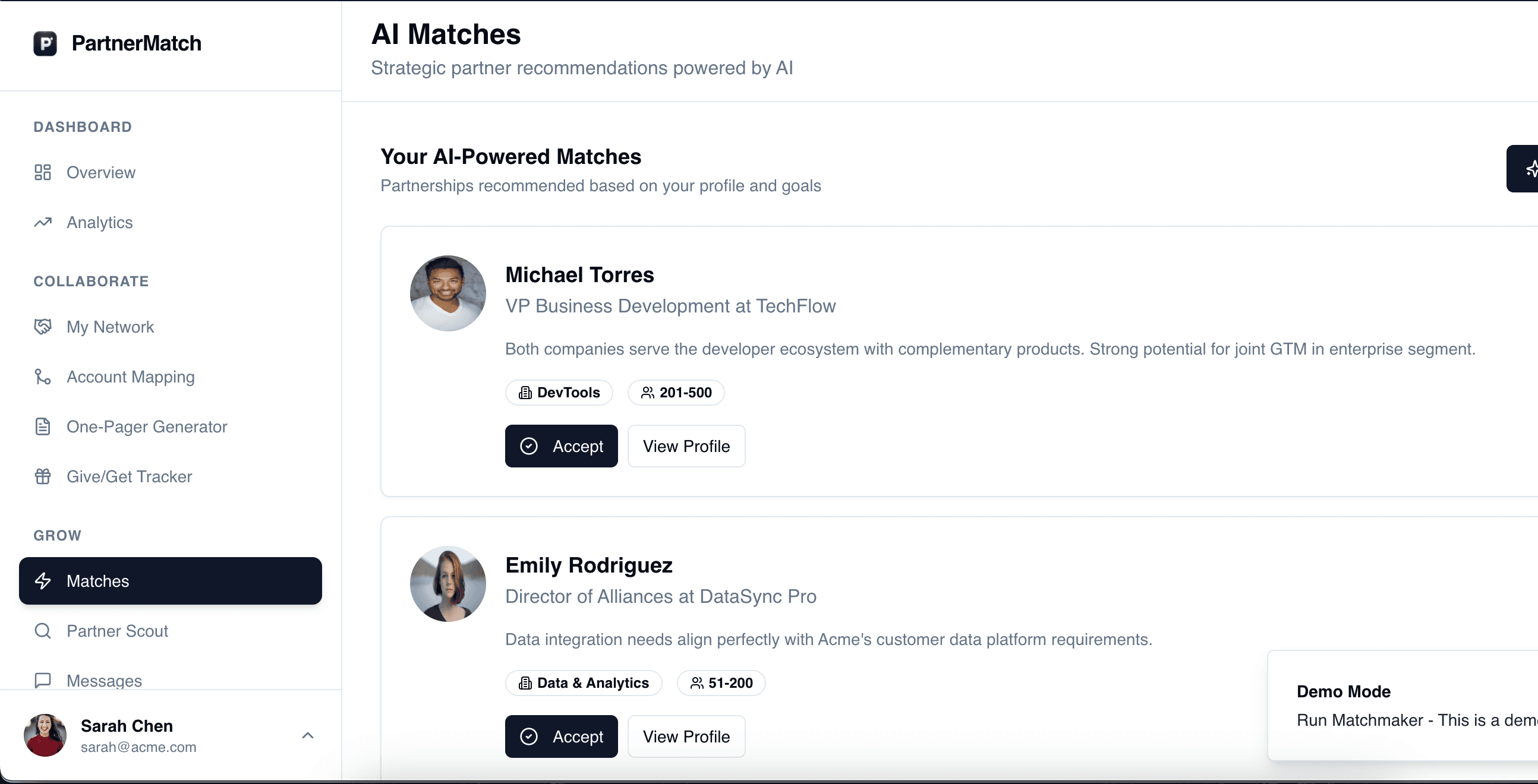
In 2026, the best Product teams build a specific "Demo Mode" into the product that simulates the integration.
Action: The rep clicks "Simulate NetSuite Sync."
Visual: A progress bar appears, a "Success" confetti pops, and dummy data populates the table.
It’s theater. But it gives the rep confidence. If they feel safe showing it, they will sell it.
You can see how visual prototyping helps in the selling phase too in How to Pitch Your Product to a Potential Integration Partner.
The Feedback Loop: Bugs vs. Objections
When an integration fails, Engineering hears about Bugs (e.g., "Error 500").
But Product needs to hear about Objections (e.g., "The customer didn't buy because we lack Field Mapping").
Sales reps usually don't log these objections in Jira. They complain at the water cooler (or Slack).
The Solution: The "Lost Deal" Audit.
Once a month, the Product Leader should sit with the Sales Leader and review the "Closed Lost" deals where an integration was involved.
Question: "Did we lose because the integration broke, or because it lacked a feature?"
This data is worth its weight in gold. It prevents you from building 'v2' features that nobody wants, and focuses you on the 'v1' gaps that are losing revenue.
You can feed this data back into your RICE scoring by following the steps in How to Prioritize Your Integration Roadmap.
The Verdict for 2026
The job of a Product Leader doesn't end when the code merges. It ends when the revenue hits the bank account.
You are the bridge. If you build an incredible bridge (API) but don't build an on-ramp (Sales Enablement), don't be surprised when nobody crosses it.
Equip your sales team with stories, not just specs.