Founders & CEOs
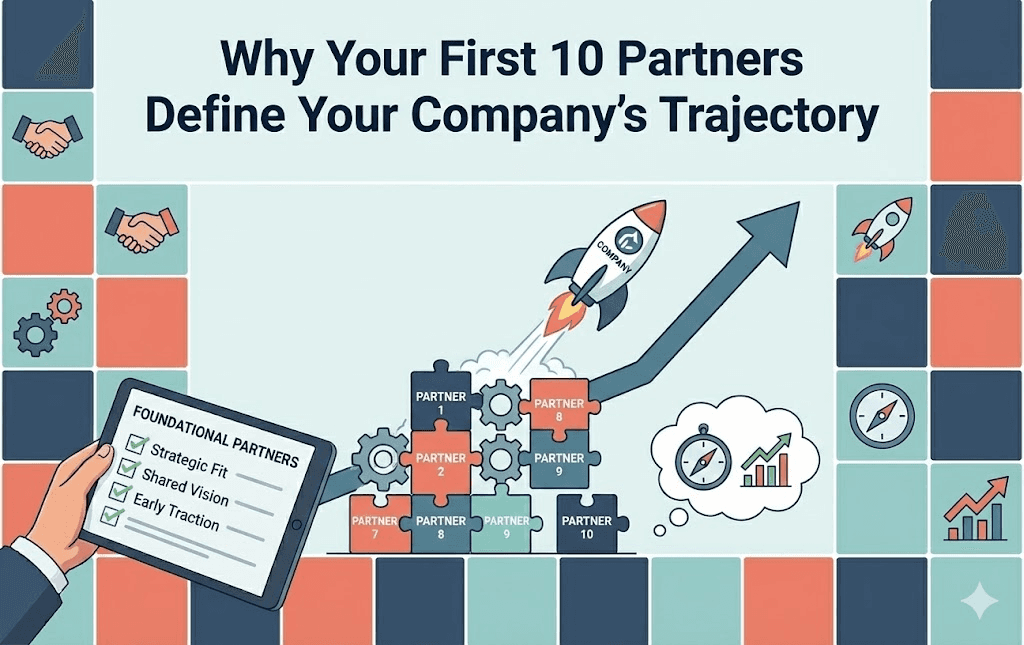
Why Your First 10 Partners Define Your Company’s Trajectory
Date
Oct 4, 2025
Author
Matt Astarita
When you are a Seed or Series A startup, you are desperate for validation.
If a large company, let’s say, a legacy Fortune 500 bank approaches you and says, "We want to partner with you," your instinct is to pop the champagne. You sign the deal. You put their logo on your homepage. You tell your investors.
But you might have just made a fatal mistake.
Your first 10 partners are not just revenue sources; they are Product Architects and Brand Signals.
If you pick the wrong first 10, you will build the wrong product for the wrong market, and you will be labeled as a "Legacy Solution" before you even launch.
Here is why your initial ecosystem selection is the most critical strategic decision you will make in 2026, and how to choose your "Design Partners" carefully.
Jump to a section:
The "Guilt by Association" Effect (Brand Signal)
The "Custom Feature" Death Spiral (Product Roadmap)
The "Design Partner" Criteria
1. The "Guilt by Association" Effect (Brand Signal)
In B2B, nobody knows who you are. They judge you by who you stand next to.
The "Anchor" Principle: Your brand is anchored by your integrations.
If your first 3 integrations are with modern, high-growth tools (e.g., Notion, Figma, Linear), the market assumes you are: Modern, Product-Led, Agile.
If your first 3 integrations are with legacy, on-premise ERPs (e.g., Oracle from 1999, SAP), the market assumes you are: Enterprise, Slow, Expensive.
The Danger: If you want to sell to SMBs, but you partner with Enterprise giants, the SMBs will think you are too expensive/complex. If you want to go Enterprise, but you partner with freemium SMB tools, the Enterprise CIOs will think you lack security/compliance.
Strategic Advice: Curate your "Logo Wall" like an art gallery. Every logo sends a signal. If a partner doesn't align with your 5-year vision, do not put them on the wall even if they want to pay you.
[Internal Link Opportunity]: Link this section to Article #31: "Why Ecosystem-Led Growth is the New PLG" to discuss how your ecosystem defines your market positioning.
2. The "Custom Feature" Death Spiral (Product Roadmap)
This is where startups die.
Your first 10 partners will have demands. They will say: "We love your product, but we need you to build X, Y, and Z before we can launch."
If you chose the Wrong Partner (i.e., someone outside your Ideal Customer Profile), you will build features that only they want.
You spend 3 months building a custom SOAP API integration because Partner #1 asked for it.
But the rest of the market uses REST APIs.
You have now wasted 25% of your engineering year building "Tech Debt" for a single partner.
If you choose the Right Partner (a true visionary in your space), their requests are actually a preview of the future.
Partner #1 asks for "AI Agents."
You build it.
Suddenly, the entire market wants it, and you are 6 months ahead.
The Rule: Only build features for a partner if you can resell that feature to 100 other customers. If it’s a "One-Off," say no.
[Internal Link Opportunity]: Link this section to Article #23: "The Partnership Manager’s Guide to Surviving Q4" to reference the difficulty of managing engineering resources (Code Freeze).
3. The "Design Partner" Criteria
So, how do you pick the "Right" first 10?
You are looking for Design Partners, not just distribution channels. A Design Partner is a company that is willing to co-innovate with you.
Use this checklist to vet your first 10:
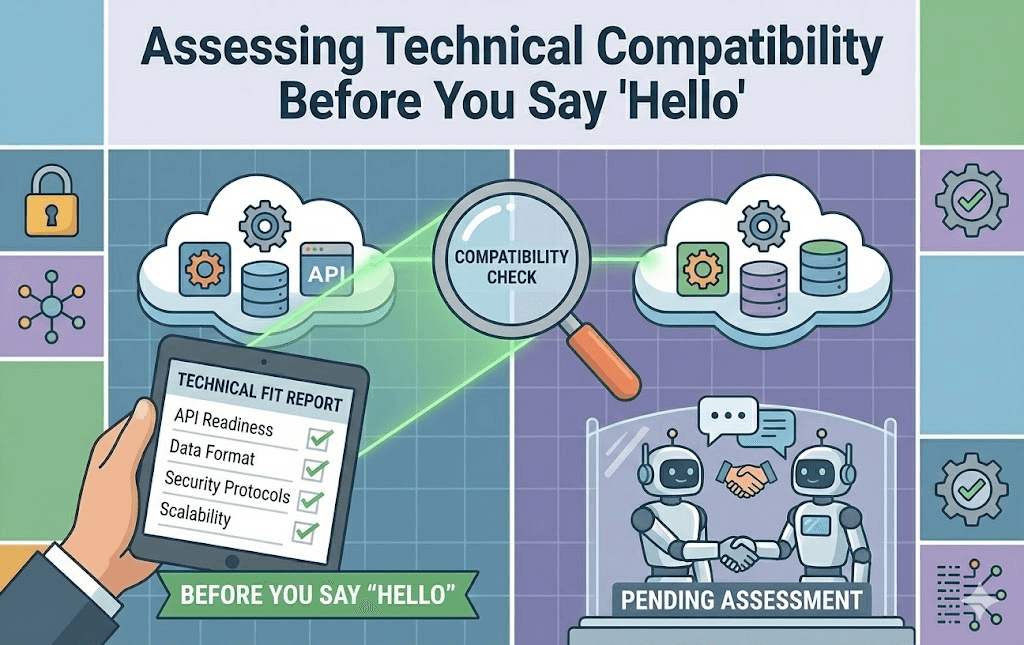
High Tech Maturity: Do they use a modern stack? If their tech is archaic, your integration will be buggy, and your engineers will quit. [Internal Link Opportunity]: Link this section to Article #18: "How to Use AI to Analyze Tech Stack Compatibility" to ensure technical fit.
Strategic Intent Alignment: Are they trying to solve the same problem you are? If you are solving "Speed" and they are prioritizing "Control," you will clash.
Speed of Execution: Can they move fast? If it takes them 6 months to sign an NDA, they will kill your startup's momentum. You need speed.
The "Velvet Rope" Strategy: Don't open your program to everyone. Make it exclusive. "We are selecting 10 Founding Partners for 2026. We are looking for companies that want to shape our roadmap." This framing turns "Please work with us" into "Are you good enough to work with us?"
The Verdict
It is better to have 3 partners who pull you up than 10 partners who hold you back.
Your trajectory is set by the company you keep. Be ruthless with your early selection. If you compromise now for a quick win, you will pay for it for the next 5 years.
[Internal Link Opportunity]: Link this section to Article #27: "Building Your First Partner Program" to review the steps for recruiting these first 5-10 partners.