Product Leaders
The "Tech Stack Overlap": How to Find Your Technical Soulmate
Date
Oct 5, 2025
Author
Matt Astarita
Struggling to decide which integration to build next? Let's clear the air. The modern Product Leader doesn't rely on "gut feeling" or sales requests to pick partners. They rely on Tech Stack Overlap.
In 2026, "Synergy" is not a buzzword. It is a queryable dataset.
If you build an integration for a tool that your customers don't use, you have wasted your engineering budget. If you ignore a tool that 80% of your customers do use, you are actively encouraging churn.
Finding your "Technical Soulmate" isn't about finding a cool company; it's about finding the company that is already living inside your customers' servers. Here is how to map the overlap and execute the perfect match.
Rethinking "Partner Fit"
The old days of partnering with a company just because "we share the same investors" are long gone. Thank goodness.
Think of your customer's tech stack like a puzzle.
Your product is one piece.
Your goal is to find the pieces that are adjacent to you.
Bad Fit: You sell a "Kubernetes Monitor." Your partner sells "HR Payroll Software." (No adjacency. Different buyers, different stacks).
Good Fit: You sell a "Kubernetes Monitor." Your partner sells "Cloud Security." (High adjacency. Same buyer, same infrastructure).
When the stack overlaps, the integration feels "native." It flows. When it doesn't, it feels forced.
What is Tech Stack Overlap?
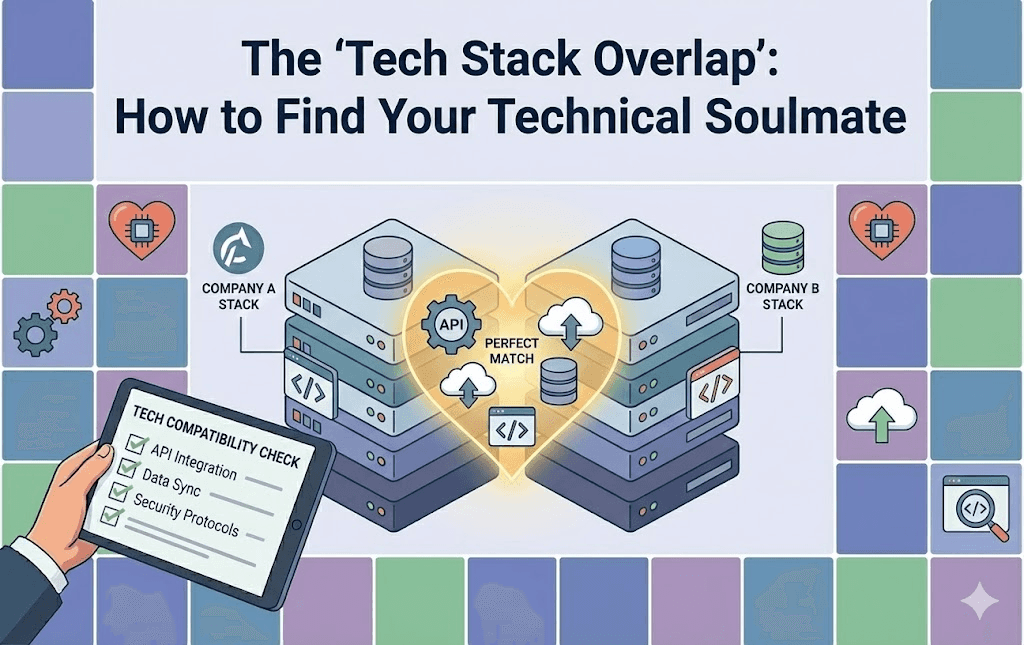
Tech Stack Overlap quantifies how many of your current users are simultaneously running another specific software.
The Metric: "65% of our customers also have an active subscription to [Partner X]."
The Signal: This is a Retention Screaming Match. If you integrate with Partner X, you cement yourself into 65% of your base.
[Internal Link Opportunity]: Link this section to Article #6: "The Hidden Cost of Bad Partnership Data" to emphasize why accurate data is critical here.
The Prioritization Matrix (Where to Focus)
Not all overlaps are created equal. Use this matrix to classify potential technical partners.
Customer Overlap
| Technical Compatibility (API)
| Category
| Action
|
High (>40%)
| High (Modern REST/GraphQL)
| The Soulmate
| Build Immediately. Assign dedicated engineers. Market heavily.
|
High (>40%)
| Low (Legacy SOAP/On-Prem)
| The Heavy Lift
| Strategic Bet. It will be painful to build, but the retention payoff is huge.
|
Low (<10%)
| High (Modern REST/GraphQL)
| The Long Tail
| Low Priority. Build only if it takes <1 week, or push to a 3rd party (Zapier).
|
Low (<10%)
| Low (Legacy SOAP/On-Prem)
| The Distraction
| Ignore. Do not let Sales convince you to build this.
|
How to Find the Data (Stop Guessing)
You don't need to send a survey to your customers asking, "What else do you use?" They won't answer.
In 2026, you can find this signals digitally.
Technographic Scanning: Tools like BuiltWith or 6sense can scan your customers' websites to see what public scripts they are running (e.g., "They have the HubSpot pixel and the Drift widget").
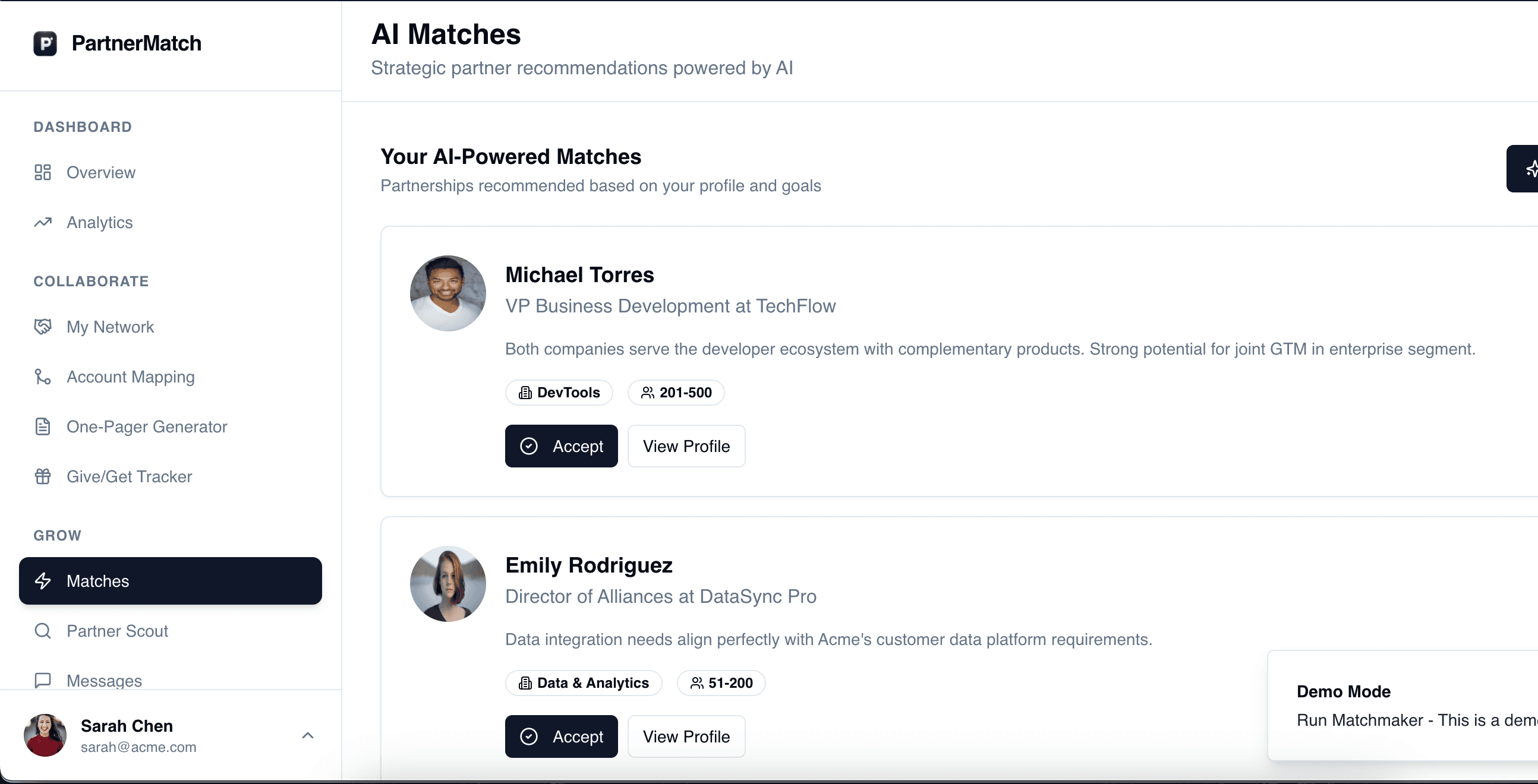
Ecosystem Mapping: Platforms like PartnerMatch.co and Crossbeam allow you to securely map your CRM list against a partner's list.
Result: "You have 4,000 mutual customers with Snowflake."
[Internal Link Opportunity]: Link this section to Article #42: "How to Prioritize Your Integration Roadmap" to slot these findings into your RICE score.
The "API Compatibility" Layer
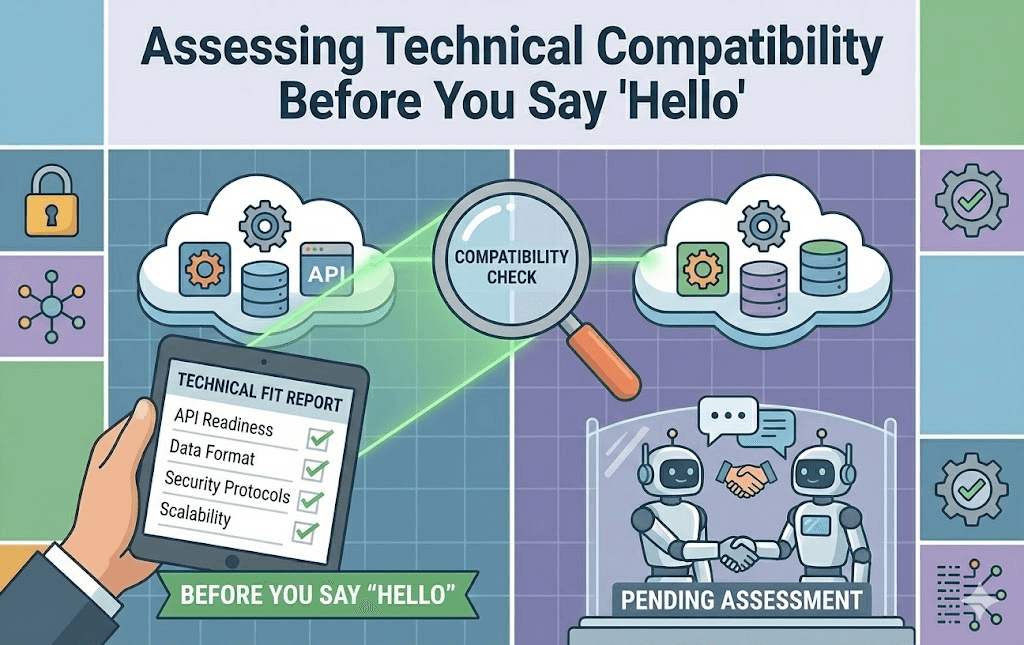
Finding the customer overlap is step one. Finding the code overlap is step two.
Just because your customers use a tool doesn't mean you can integrate with it.
Data Models: Do they structure data the same way? (e.g., Is a "Contact" a person or a company?)
Authentication: Do they use standard OAuth2, or some proprietary nightmare?
Rate Limits: Can their API handle your volume?
Pro Tip: Before you sign the partnership, run a "Hello World" test against their API. If it takes more than 4 hours to authenticate, downgrade them in your matrix.
[Internal Link Opportunity]: Link this section to Article #18: "How to Use AI to Analyze Tech Stack Compatibility" for the automated way to check this.
The Verdict for 2026
Your product roadmap should be a reflection of your customers' reality.
If your customers live in Slack, you build for Slack. If they live in Microsoft Teams, you build for Teams.
Don't build integrations based on which partner buys you the best steak dinner. Build them based on the Tech Stack Overlap.
Data doesn't lie. Relationship managers do. Trust the stack.