The Shift
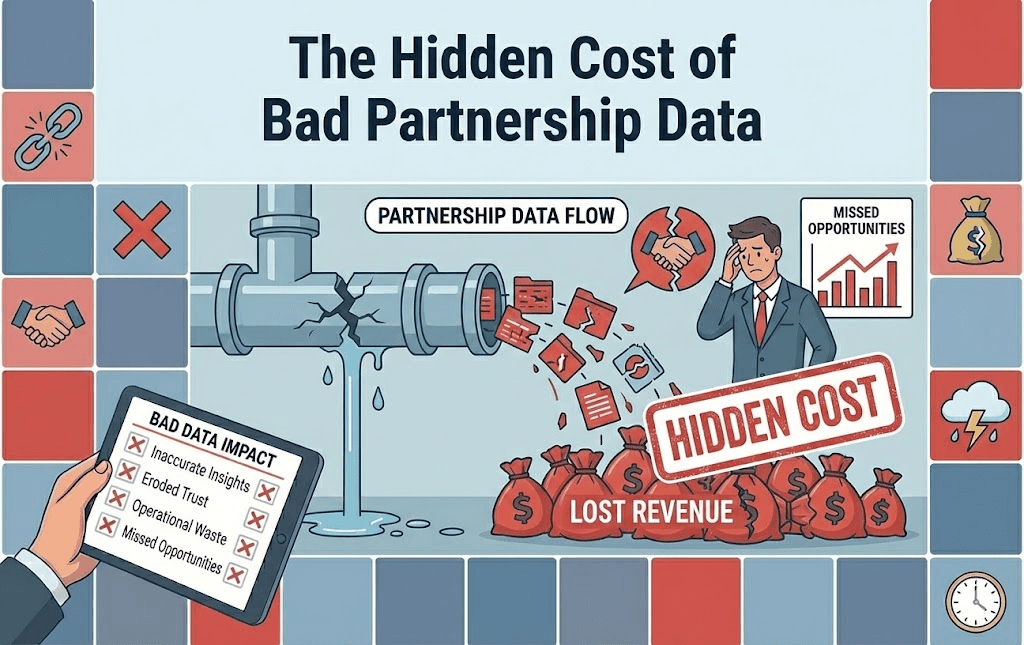
The Hidden Cost of Bad Partnership Data
Date
Oct 21, 2025
Author
Matt Astarita
Let's look at a scenario that happens every day in SaaS.
You find a perfect potential partner. Let's call them CloudFlow. On paper, they are a dream:
They serve the same Mid-Market CFOs you do.
Their "Partners" page says they are looking for integrations.
LinkedIn says their Head of Partnerships is named "Sarah."
You spend three weeks engaging. You write a custom deck. You finally get Sarah on a call.
Five minutes in, she stops you. "Oh, we actually deprecated that API last month. We’re pivoting to Enterprise only. Also, I’m leaving the company next week."
Click.
You just burned 20 hours of work. But the problem isn't that you lost one deal. The problem is that your entire Go-To-Market (GTM) strategy is built on a foundation of sand.
We often talk about the price of data (e.g., "$10k/year for a database"), but we rarely talk about the cost of using bad data. In the era of Ecosystem-Led Growth (ELG), bad data isn't just an annoyance, it’s a revenue leak.
Here is the invisible tax you are paying right now.
The Three Types of Data Decay
To understand the cost, you have to understand the rot. In 2025, partnership data decays faster than sales data because it relies on two volatile variables: Company Strategy and People.
Identity Decay (Who): People change jobs every 18 months in tech. A static list of "Partnership Managers" is 30% obsolete by the time you buy it.
Tech Decay (What): APIs change. Documentation gets buried. A company that was "Open" yesterday might be "Closed" today because of a security audit.
Intent Decay (Why): This is the silent killer. A company might look perfect firmographically, but if their strategic focus for Q3 is "Churn Reduction" and you are pitching "User Acquisition," you are invisible to them.
The Financial Impact: Measuring the "Lazy Tax"
If you are running an ecosystem strategy on static lists or manual scrapes, you are paying a "Lazy Tax" on every interaction.
1. The CAC of Dead Ends
Best for: Losing money efficiently.
Every hour your highly-paid Partnership Manager spends researching a company that isn't actually looking for partners is wasted Customer Acquisition Cost (CAC).
The Math: If a PM earns $120k/year (~$60/hour) and spends 10 hours a week chasing bad leads, you are burning $31,200/year per head on dead ends. That’s more than the cost of the software that could solve the problem.
2. The "Trust" Penalty
Best for: Burning bridges.
When you reach out with bad data (e.g., pitching an integration for a product they just killed), you don't just get a "No." You get a "Never." Partnerships are built on reputation. If you show up unprepared, you signal that you are a low-value partner. You are permanently disqualified from that ecosystem.
3. The Missed "In-Market" Window
Best for: Helping your competitors win.
While you were chasing a cold lead from a database, a perfect partner was actively searching for a solution like yours. Because you relied on static data, you missed their Signal. Your competitor, who uses Intent Data, found them, connected, and signed the MOU before you even knew they were looking.
⚡ Pro-tip: In Ecosystem-Led Growth, Speed to Signal is the new competitive advantage. The winner isn't the company with the biggest database; it's the company that detects intent first.
The Solution: From "List Buying" to "Signal Catching"
You cannot build a modern ecosystem on static spreadsheets. You need a dynamic layer of intelligence.
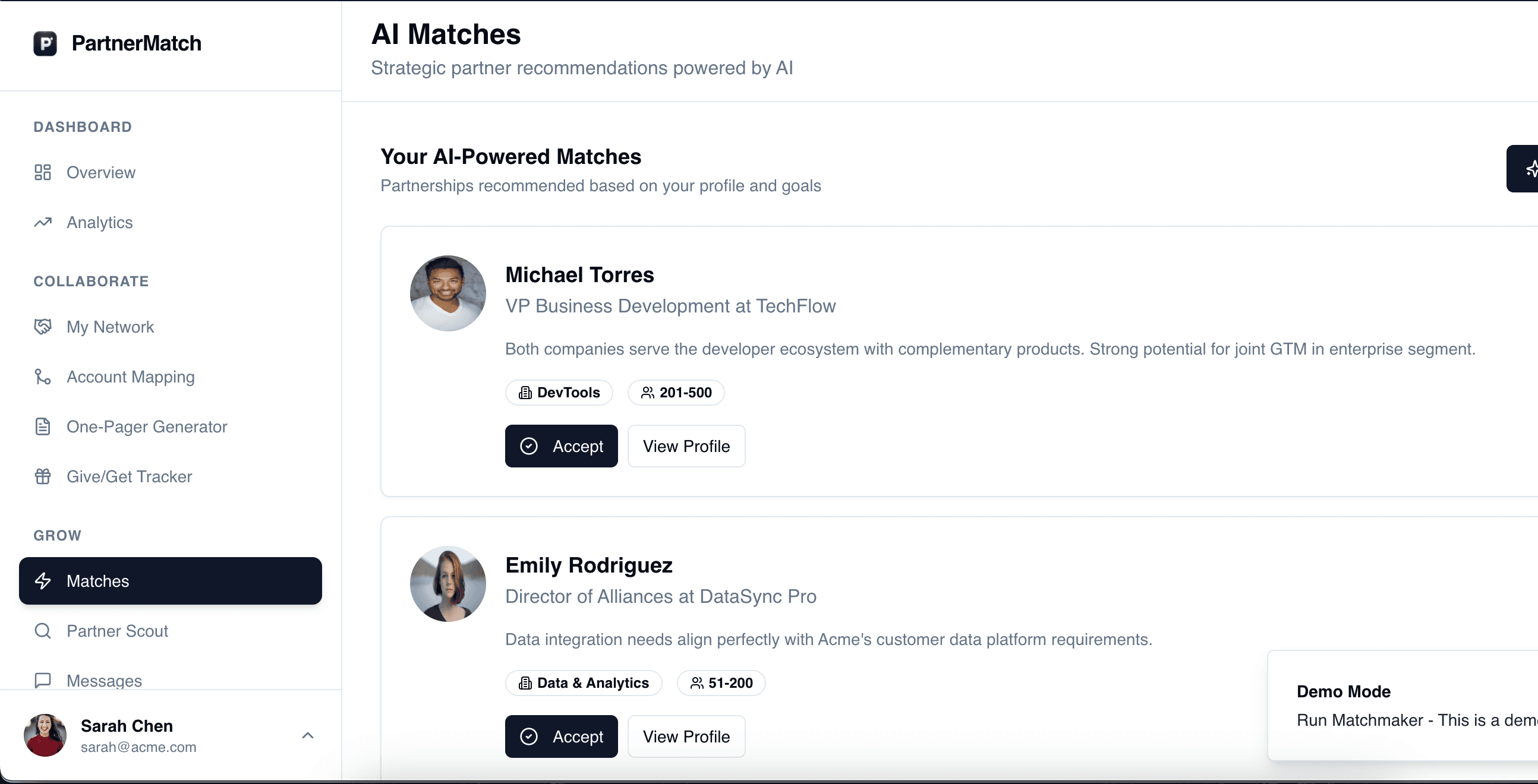
This is why we built PartnerMatch.co. We don't sell lists of names; we map Live Strategic Intent.
Old Way (Static): "Here is a list of 5,000 Fintech companies."
New Way (Dynamic): "Here are the 12 Fintech companies that updated their API docs last week and are searching for 'Compliance Partners'."
The Verdict
Data is the fuel for your ecosystem engine. If you put low-octane, dirty fuel into a Ferrari, it won't just run slow—it will break down.
Stop buying lists that lie to you. Start optimizing for Truth.
When you eliminate the noise of bad data, you don't just save time. You unlock the true promise of Ecosystem-Led Growth: Scalable, high-trust revenue.