Tactical Execution
The Art of the "Double Opt-In" Introduction
Date
Dec 5, 2025
Author
Matt Astarita
The Art of the "Double Opt-In" Introduction
There is a special place in the "Inbox Hall of Shame" for the Surprise Introduction.
You know the one. You wake up to an email cc’ing you and a complete stranger:
"Hey [You], meet [Stranger]. You two should chat! I’ll let you take it from here."
Panic. You don't know who this person is. You don't know why you should chat. But now, social pressure dictates that you must reply, or you look like a jerk.
This is a Single Opt-In. The connector decided for you.
In 2026, where attention is the most expensive currency in business, the Single Opt-In is a capital offense. It burns your social capital instantly.
If you want to be known as a "Super Connector", someone whose emails always get opened, you must master the Double Opt-In.
Jump to a section:
The Anatomy of the Double Opt-In
The "Blurb" Rule (Make Them Do the Work)
Automating Consent with Tech
1. The Anatomy of the Double Opt-In
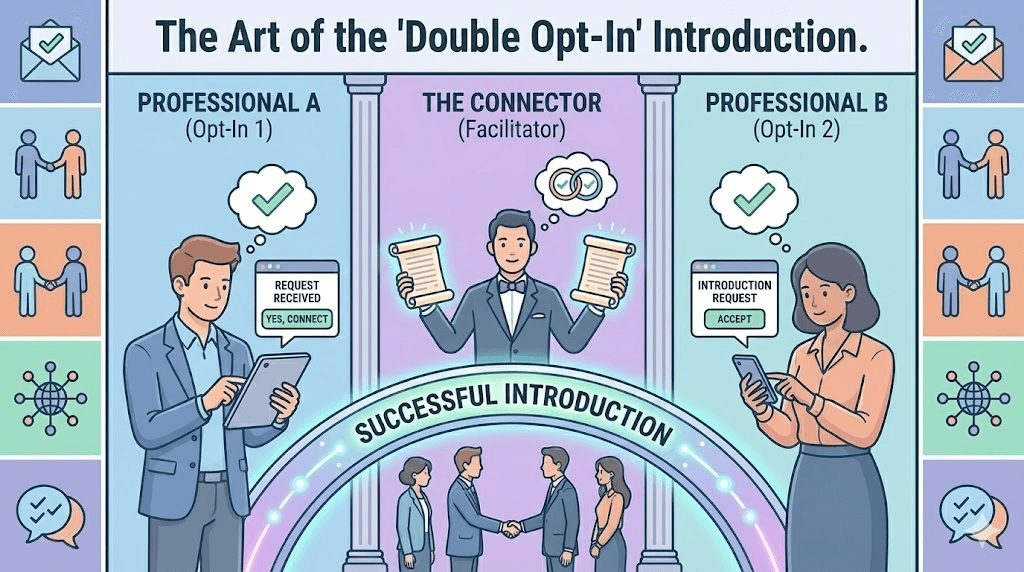
The Double Opt-In is a simple respectful protocol: You never connect two people until both have explicitly agreed.
It signals that you value their time more than your own ego. Here is the workflow:
Step 1: The Request Person A asks you: "Can you introduce me to Person B?"
Step 2: The Vetting (You) You ask yourself: "Is this actually valuable for Person B?" If no, you say no. If yes, you proceed. [Internal Link Opportunity]: Link this section to Article #24: "How to Spot a Time-Waster" to explain how to filter requests before passing them on.
Step 3: The Ask (The "Opt-In") You email Person B privately:
"Hey [Person B], [Person A] asked for an intro to discuss [Topic]. I think it could be interesting because [Reason]. Are you open to this, or is your plate too full right now? No pressure at all."
Step 4: The Introduction Only after Person B says "Yes," do you send the connecting email.
2. The "Blurb" Rule (Make Them Do the Work)
The biggest friction in making intros is writing the email context. Don't do it yourself. Force the requester to write it.
The Script:
"Sure, I can ask. Please send me a 2-3 sentence 'forwardable blurb' explaining who you are and why this is valuable for them. I will copy-paste that to them."
Why this works:
It tests their intent. If they are too lazy to write 3 sentences, they don't deserve the intro.
It ensures accuracy. They know their value prop better than you do.
It saves you time. You are just the carrier pigeon, not the author.
To ensure the recipient has full context, suggest they attach a One-Pager that investors and partners love.
3. Automating Consent with Tech
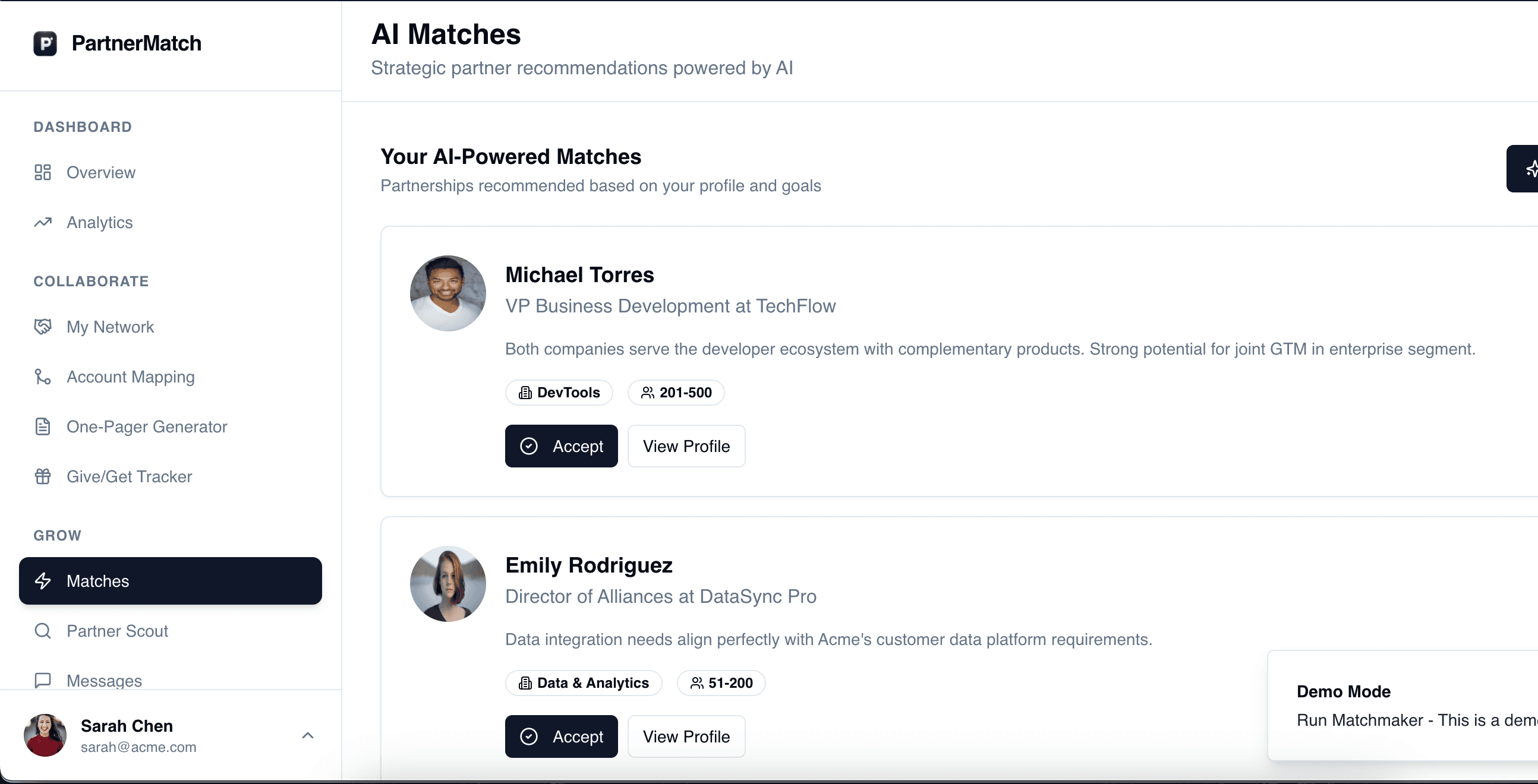
In the manual world, the Double Opt-In takes 3 emails. In the PartnerMatch.co world, it takes 0.
We built our entire platform on the philosophy of the Double Opt-In.
User A expresses interest in User B.
User B receives a notification: "User A (Intent: Reselling) wants to connect."
User B clicks "Accept."
The Channel Opens.
We do not allow "Cold DMs" or surprise connections. If you are talking to someone on our platform, it is because you both swiped right.
This eliminates the 'Social Pressure' to reply. It ensures that every conversation starts with mutual consent and high intent.
To explain why mutual intent creates faster deals, read Intent Data vs. Identity Data: The New Currency of Growth
The Verdict
Your network is an asset. If you spam it with bad intros, the asset depreciates. If you protect it with the Double Opt-In, the asset appreciates.
Be the person who provides an "Exit Ramp" (the ability to say no), not the person who creates a traffic jam.