Notes on tech partnerships, revenue, and relationships.
Page 9 of 18
Running global partner workshops
How to plan, run, and follow through on partner workshops across regions. Agenda, hands-on labs, timezone and language, and the work after the room that turns a session into pipeline.
Read →
Training partner sales teams: formats that stick
How to train partner sales teams so the pitch survives turnover. Live versus async, certification that means something, repeatable formats, and measuring retention rather than attendance.
Read →
MCP for B2B: pricing, packaging, and access control
How to price an MCP surface for B2B SaaS: plan gating, usage limits, and access control, without turning a distribution channel into a SKU nobody adopts.
Read →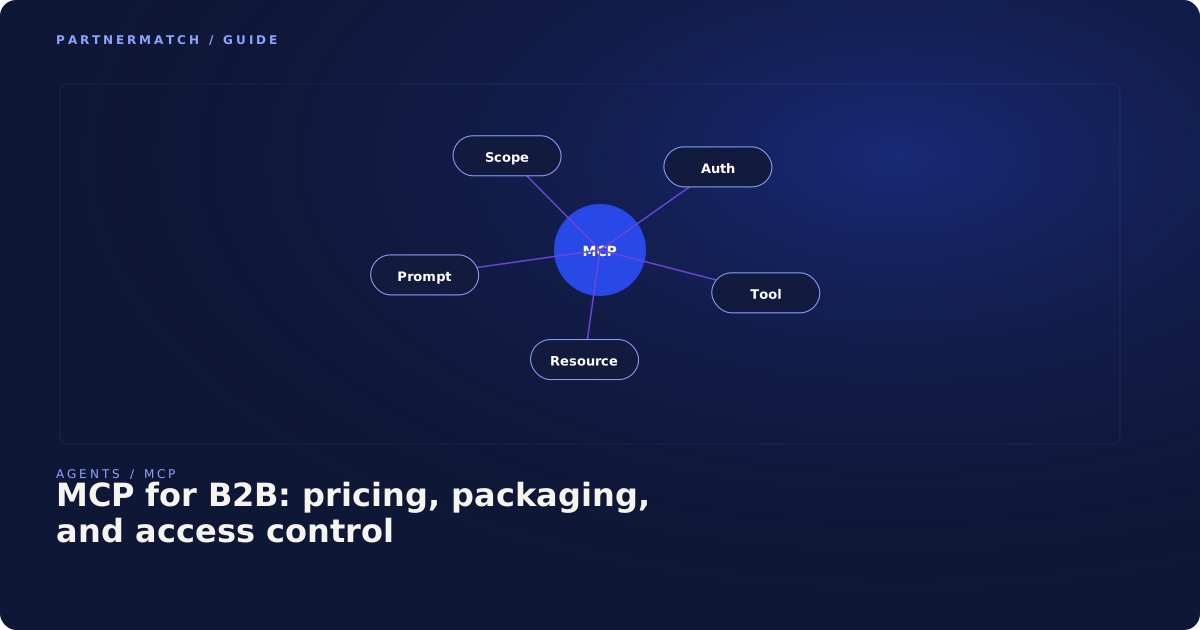
Human-in-the-loop patterns for agent write actions
Approval gates, confirmation UX, audit trails, and blast-radius limits for MCP and agent write tools, so an assistant can help without sending, paying, or deleting on its own.
Read →
Distribution through agents: getting discovered in AI ecosystems
How agents and users find MCP servers and tools, where to list, and which quality signals you can actually control, without invented ranking claims.
Read →
MCP vs API vs iPaaS: three surfaces to your product
MCP, a public API, and iPaaS connectors are three different surfaces to the same product. Compare audience, discovery, interaction, and maintenance, then decide what to ship next.
Read →
MCP tools, resources, and prompts: what to expose first
The three MCP primitives, how they differ, and how to pick the first customer job and a small, safe surface for a SaaS MCP server.
Read →
API changelog and versioning strategy for partners
Versioning schemes, changelog discipline, and a deprecation policy that external partners can plan around, so integrations keep working while the API evolves.
Read →
SDKs: build, generate, or skip?
When an SDK is worth the cost for partner developer experience, when to generate from OpenAPI, when to hand-build, and which languages to ship first.
Read →