Tools & Technology
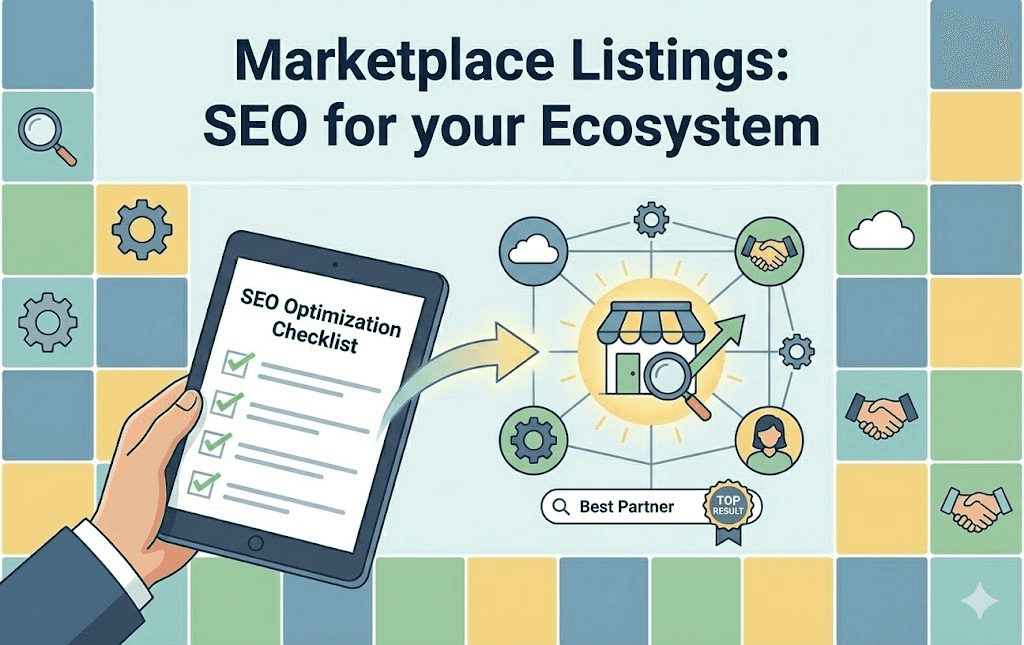
Marketplace Listings: SEO for your Ecosystem
Date
Oct 10, 2025
Author
Matt Astarita
Struggling to get installs from the Salesforce AppExchange or HubSpot Marketplace? Let's clear the air. You probably treat your listing like a "About Us" page, a boring description of your company.
In 2026, Cloud Marketplaces (AWS, Atlassian, Shopify, HubSpot) are the New Google for B2B buyers.
A CTO doesn't Google "best accounting software."
They search the Salesforce AppExchange for "accounting" to find what connects natively.
If you aren't ranking in the top 3 results for your category, you are invisible. This is not Branding. This is Marketplace SEO. Here is how to optimize your listing to algorithmically force your way to the top of the search results.
The Algorithm: Keywords in the Title
The Marketplace search bar is a primitive search engine. It relies heavily on Exact Match Keywords. Most companies fail because they try to be "Clever" instead of "Clear."
Bad Title: "Acme Corp: The Future of Finance." (Nobody searches for 'Future').
Good Title: "Acme: Subscription Billing & Invoicing for Salesforce."
The Rule: Your App Name must include the Problem You Solve. If you solve "Inventory Management," those two words must appear in your H1. Do not hide them in the body text.
The "Review Moat" (The #1 Ranking Factor)
Marketplaces are trust engines. The algorithm prioritizes one metric above all else: Review Velocity.
Scenario: App A has 500 reviews (last one 2 years ago). App B has 50 reviews (last one yesterday).
Result: App B often outranks App A. Recency matters.
The Strategy: Automate the Ask. Do not wait for users to feel "inspired" to write a review. They won't.
Trigger: When a user hits a "Success Milestone" (e.g., sent 1,000 invoices).
Action: Send an automated email: "Loving the integration? Leave a review on the HubSpot Marketplace and we’ll send you a $25 Amazon gift card."
Note: Incentivized reviews are gray zones in some marketplaces (check TOS), but solicited reviews are essential.
The Visuals: Video or Death
In 2026, buyers do not read. They scan. If your listing relies on a wall of text, your bounce rate is 90%.
The Asset Stack:
The 60-Second Demo: Not a "Hype Video" with stock footage. A screen recording showing exactly where the button is inside the host app. "Click here, see data here."
The Architecture Diagram: Tech buyers want to see the data flow. Show the API lines.
The "Before/After" Screenshot: "Before: Excel Hell. After: One Dashboard."
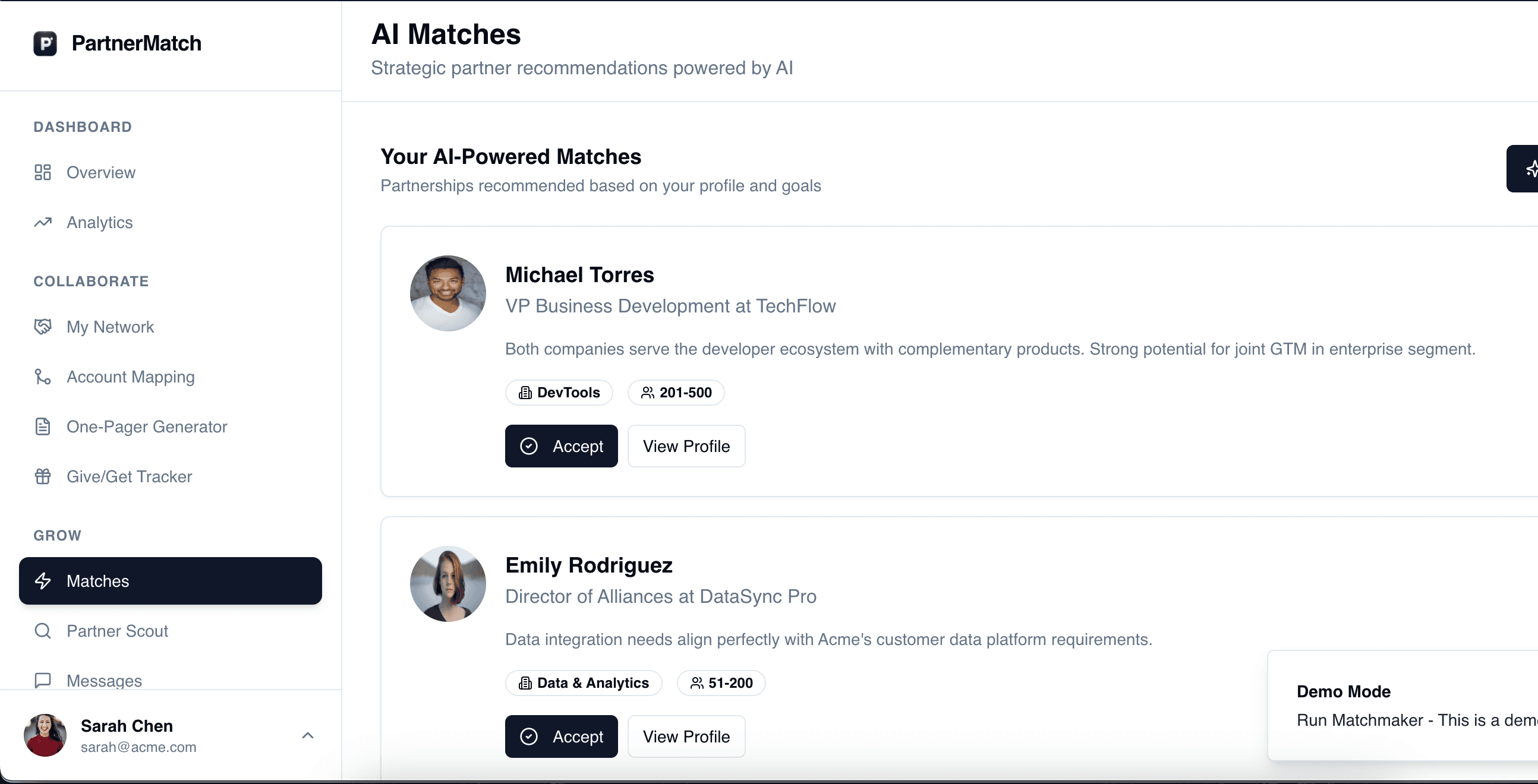
[Internal Link Opportunity]: Link this section to Article #52: "The Anatomy of a Perfect Match Card" to reinforce visual conversion best practices.
The "Install" Friction (Get It Now vs. Contact Us)
Marketplaces track Conversion Rate. If 1,000 people view your page and 0 install it, the algorithm buries you.
The Killer: The "Contact Sales" button.
The Fix: The "Test Drive" / "Freemium" button.
Even if you are Enterprise-only, offer a "Sandbox Mode" or a "Read-Only" version that installs instantly. You want the "Install" counter to tick up. Once they install, then your Sales Rep can reach out to upsell the Enterprise license. Algorithm Rule: High Install Rate = Higher Ranking.
The "Version" Update (The Freshness Signal)
Algorithms hate abandonware. If your "Last Updated" date is from 2024, the Marketplace assumes your app is broken.
The Hack: Even if your code hasn't changed, push a minor "metadata" update or a small bug fix every 30 days. This refreshes the "Last Updated" timestamp.
Result: Users see "Updated: 2 days ago." Trust skyrockets.
The "Co-Marketing" Backlink
Marketplaces (like Google) look at external signals. If the Host Platform (e.g., Shopify) links to your listing from their blog, you win.
The Strategy: Write a guest post for the Platform's blog about a niche use case.
Topic: "How to solve [Specific Problem] using Shopify + [Your App]."
Link: Direct deep link to your listing.
This is the highest-authority backlink you can get. It tells the search engine: "The platform itself endorses this app."
The Verdict for 2026
Your Marketplace Listing is your Second Homepage. For high-intent buyers (people already using the host platform), it is your Primary Homepage.
Stop treating it like a "set and forget" task.
Update the keywords.
Harvest the reviews.
Refresh the timestamp.
If you win the search bar, you win the customer before they even talk to a salesperson.