Tactical Execution
Resellers vs. Referral Partners: Which Do You Need Right Now?
Date
Nov 13, 2025
Author
Matt Astarita
In the early days of a partnership strategy, there is a dangerous temptation to say "Yes" to everyone.
“You want to send us leads for a 15% commission? Sure!”
“You want to put us on your price list and resell us? Great!”
Fast forward six months. Your support team is screaming because the "Resellers" are selling features you don't have. Your finance team is confused because the "Referral Partners" are demanding payments for deals they barely touched.
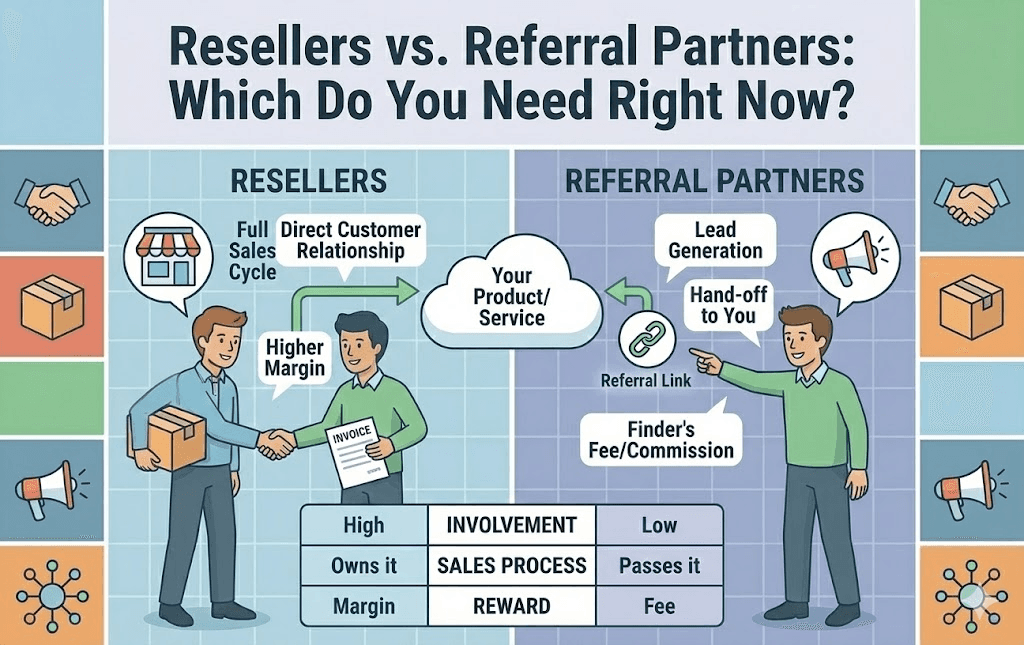
The terms "Referral" and "Reseller" are not just different labels. They are fundamentally different business models with different unit economics, legal structures, and resource demands.
If you pick the wrong one for your stage of growth, you won't just fail to grow, you might actually damage your brand.
Here is the deep-dive comparison to help you decide which engine to build in 2026.
Jump to a section:
The Referral Model: The "Warm Intro"
The Reseller Model: The "Extension Team"
The Hidden Cost: The "Enablement Tax"
The Decision Matrix: Which One Fits You?
1. The Referral Model: The "Warm Intro"
Definition:
A Referral Partner (or Affiliate) introduces a potential customer to your sales team.
They: Open the door.
You: Walk through, demo, negotiate, close, and support.
The Reward: A "Finder's Fee" (usually 10-20% of First Year Revenue).
The Economics
Your Margin: High (~80-90%). You keep the bulk of the revenue because you do the bulk of the work.
CAC (Customer Acquisition Cost): Low. You only pay when a deal closes (CPA model).
When to use this:
The Referral model is best when your product is complex or early-stage.
If your product requires a skilled Account Executive (AE) to explain the value, handle objections, or navigate a complex security review, do not let a partner try to sell it. They will fail.
[Internal Link Opportunity]: Link this section to Article #27: "Building Your First Partner Program" to suggest starting with referrals as your MVP.
2. The Reseller Model: The "Extension Team"
Definition:
A Reseller (VAR, MSP, or Distributor) actually sells your product.1
They: Market, demo, close, invoice, and often provide Tier 1 support.
You: Provide the software license.
The Reward: A Margin/Discount (usually 30-50% off the list price).
The Economics
Your Margin: Lower (~50-70%). You are giving away a huge chunk of revenue.
Volume: Theoretically higher. The Reseller has their own book of business and can bundle you into existing contracts.
When to use this:
The Reseller model is powerful for commoditized products or foreign markets.
Foreign Markets: If you are a US company trying to sell in Japan, you need a local reseller.2 They speak the language, understand the culture, and have the trust.
"Box Moving": If you sell standard licenses (e.g., Microsoft Office, Antivirus), resellers work great because no complex explanation is needed.
The Danger Zone:
If a Reseller owns the paper (the contract), they own the customer. You are just a vendor. If they decide to swap you out for a competitor next year, you lose the revenue and the customer data instantly.
3. The Hidden Cost: The "Enablement Tax"
This is where most Partnership Managers get the math wrong. They think Resellers are "free sales reps."
They are not free. They cost Enablement Time.
To make a Reseller successful, you have to train them to be as good as your internal sales team.
You need certification courses.
You need battle cards.
You need to answer their panic emails when they are stuck in a negotiation.
The Rule of Thumb:
If you cannot afford to dedicate 1 full-time Partner Manager for every 5-10 active Resellers, your reseller program will fail.3 They will simply stop selling your product because it's "too hard."
Referral partners, by contrast, require very little training. They just need to know who has the problem, not how to solve it.
[Internal Link Opportunity]: Link this section to Article #8: "Why Most Partnership Programs Fail" (The Sales Rep Fallacy).
4. The Decision Matrix: Which One Fits You?
Still not sure? Use this checklist.
Factor
| Choose Referral If...
| Choose Reseller If...
|
Product Complexity
| High. Needs an expert demo.
| Low. "Out of the box" solution.
|
Sales Cycle
| Long / Consultative.
| Short / Transactional.
|
Your Stage
| Seed to Series B.
| Series C+ or Global Scale.
|
Customer Control
| You want to own the relationship.
| You are okay being a "vendor."
|
Resources
| You have a small partner team.
| You have a dedicated Enablement team.
|
The Verdict for 2026
For 90% of SaaS companies, you should start with a Referral model.
It allows you to control the narrative, own the customer data, and learn what works. Only graduate to a Reseller model when you have a "Playbook in a Box" so perfect that a stranger could execute it without your help.
How PartnerMatch Helps:
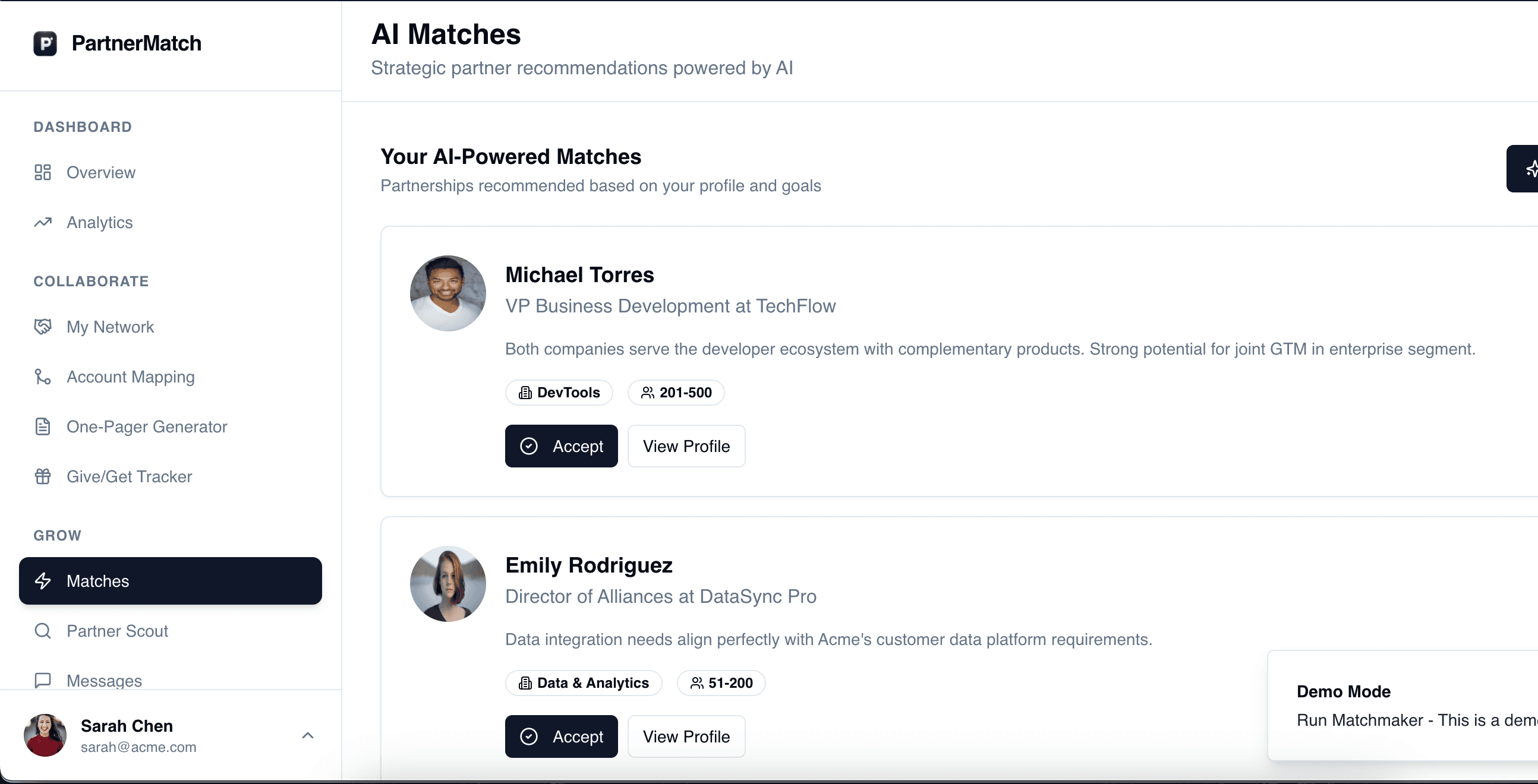
When you set up your profile on PartnerMatch.co, be specific about your Intent.
Don't say: "Looking for Partners."
Say: "Looking for Referral Partners who consult with CFOs." or "Looking for Resellers in the LATAM region."
The more specific you are about the model, the better the match.
[Internal Link Opportunity]: Link this section to Article #14: "Intent Data vs. Identity Data" to reinforce the importance of specific intent signals.