Relationship Building
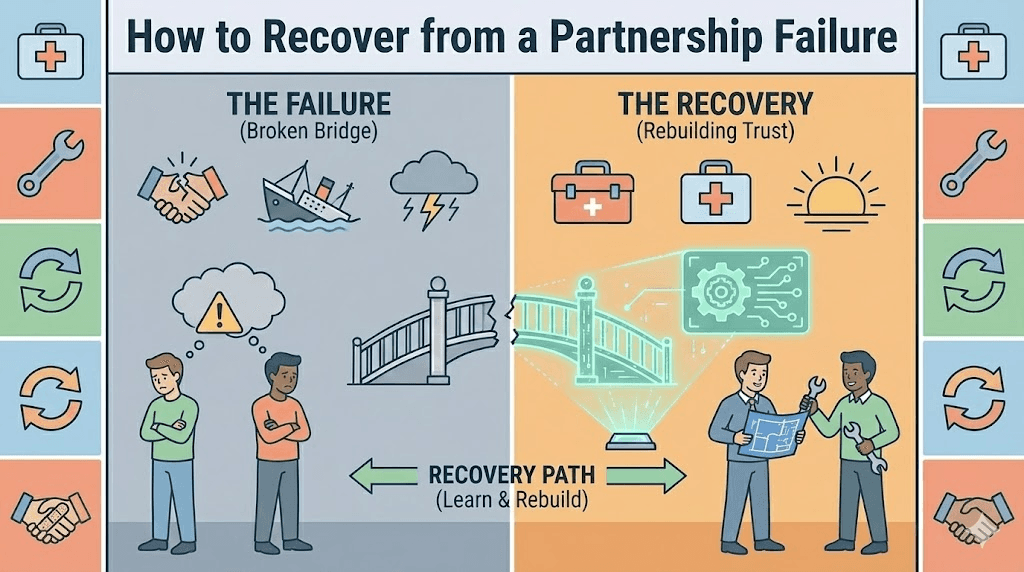
How to Recover from a Partnership Failure
Date
Dec 16, 2025
Author
Matt Astarita
Struggling to sleep because a major partnership is imploding? Let's clear the air. In the ecosystem game, a 100% success rate is impossible. If you aren't failing occasionally, you aren't aiming high enough.
In 2026, the market moves too fast for "Zombie Partnerships" deals that are dead but still walking around because nobody has the courage to shoot them.
A failed partnership is not a career-ender. A messy exit is. The difference between a "Learning Experience" and a "Reputation Disaster" is how you handle the breakup.
Here is the protocol for executing a "Soft Landing" when a deal goes south.
The "Sunk Cost" Trap
The biggest mistake Partnership Managers make is dragging out the inevitable.
The Logic: "We spent 6 months integrating! We can't quit now."
The Reality: You are throwing good money (and time) after bad.
The Rule: If the data says "No Traction" for 2 consecutive quarters, you must kill it. Hope is not a strategy. Metrics are.
Step 1: The "Adult" Conversation (No Ghosting)
Most people handle failure by hiding. They stop replying to emails, hoping the partner gets the hint. This is cowardly. It destroys trust permanently.
The Strategy: Schedule a video call. (Do not do this via email). The Script:
"John, I’ve been looking at the numbers. We aren't hitting the milestones we set 6 months ago. I think we need to be honest that the market fit isn't there right now. I propose we pause the active campaign so we stop wasting your team's resources."
Why this works: You frame it as 'Saving Their Resources.' You aren't firing them; you are releasing them from a losing battle.
This approach is a key component of the escalation matrix used for managing conflict in strategic alliances.
Step 2: The "Joint Narrative" (PR Control)
If you break up, people will talk.
Partner A says: "Partner B's tech was broken."
Partner B says: "Partner A's sales team was lazy."
This "Blame Game" hurts everyone. The Fix: Agree on a Shared Narrative. Before you leave the breakup meeting, agree on what you will tell the public/bosses.
The Narrative:
"We ran a pilot. The technical integration worked great, but we found that our customer bases were distinct enough that the overlap wasn't high enough to justify scaling. We remain huge fans of each other."
This saves face for everyone.
Step 3: The "Offboarding" Checklist (Clean Up)
A messy divorce leaves legal liabilities. In 2026, data privacy is the biggest risk.
The Protocol:
Data Deletion: Confirm in writing that all shared customer data has been deleted from both CRMs.
Logo Removal: Remove their logo from your website immediately. (Nothing is worse than a prospect asking about a dead partner).
Link Redirection: 301 Redirect any co-marketing landing pages to your home page. Don't leave broken links.
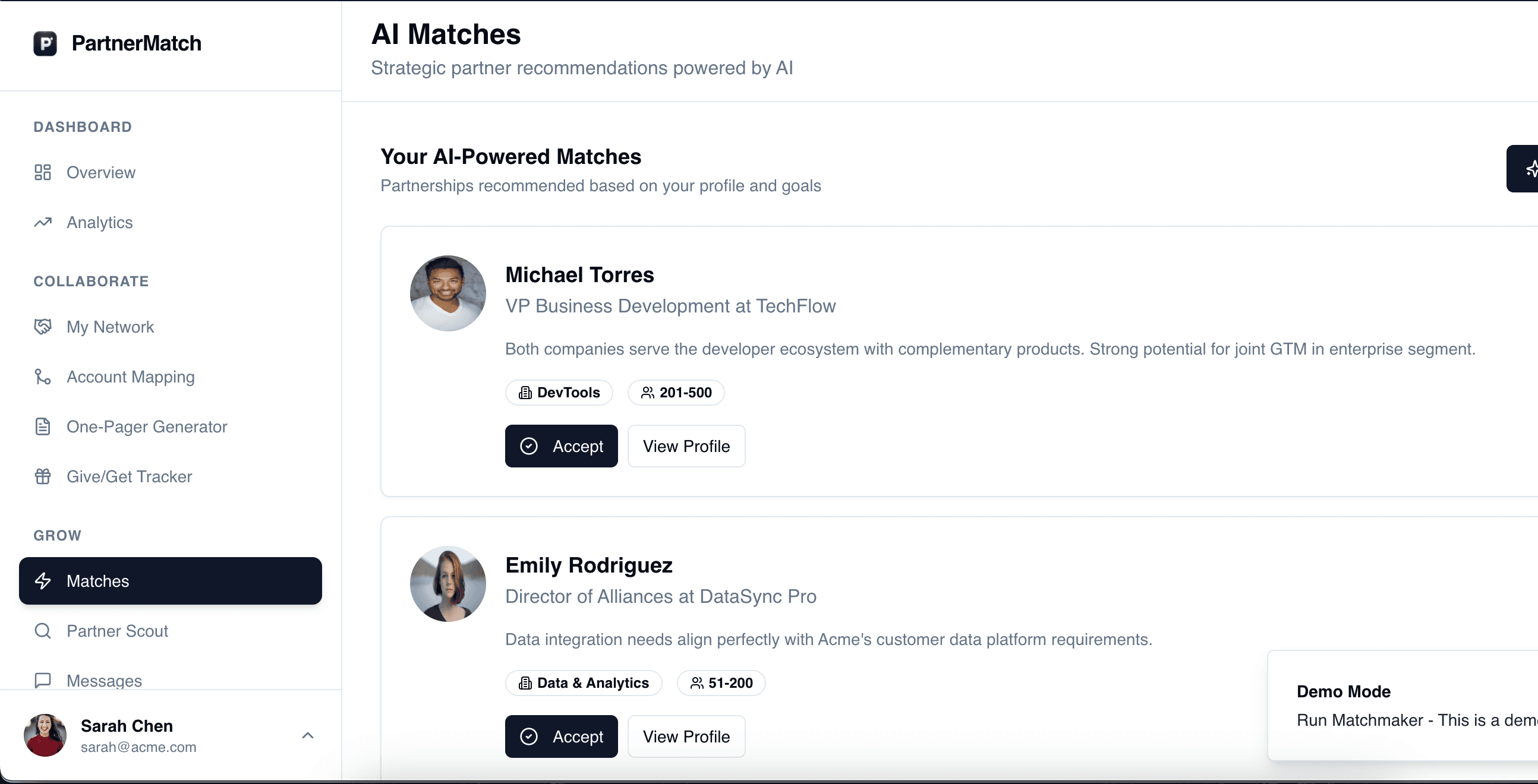
This hygiene is essential to keeping your directory fresh, a core standard of the anatomy of a perfect match card.
Step 4: The "Autopsy" (Learning)
Don't just walk away. Learn. Hold an internal Post-Mortem meeting (without the partner).
Ask the 5 Whys:
Why did it fail? (No leads).
Why no leads? (Sales team didn't pitch it).
Why didn't they pitch it? (Too complex).
Why too complex? (Integration was buggy).
Root Cause: We launched before the integration was stable.
If you don't diagnose the disease, you will infect the next partnership.
Step 5: The "Alumni" Pivot (Save the Human)
The commercial entity failed. The human relationship doesn't have to. The person you partnered with might move to a better company next year. You want them to answer your phone call then.
The "Class Act" Move: Two weeks after the breakup, send a personal note (or a small gift).
"Hey, I know the [Project X] didn't work out, but I genuinely enjoyed working with you. You’re a pro. Let's stay in touch regardless of our company logos."
You just converted a 'Failed Partner' into a 'Tier 1 Connection.'
Now, make sure to add them to your nurture list using the strategies in How to Maintain Relationships at Scale.
The Verdict for 2026
Failure is data. A failed partnership tells you exactly what your customers don't want.
Don't burn the bridge. Just close the gate, lock it politely, and leave the key under the mat. You never know when you might need to come back.